Showing posts with label contemplative cinema. Show all posts

Tuesday, March 14, 2023

Unspoken Cinema Blog 2023 CCC Canon

Together with other filmmakers, film critics, educators, cinephiles, etc... I was honored and asked by Benoit Rouilly critic, expert on slow cinema to reveal 10 of the greatest films of mines related to slow cinema. It wasn't an easy task to mention only 10 directors and their masterpieces, so I extended a little bit the list. I avoided to vote to the same director twice, keep rooms for other masters of slow cinema. 

Please click here to see the result 

If you're curious what others voted for click here


Excerpts from my contemplative cinema

After 5 + years being represented on Vimeo I decided to remove most of my short films from the platform. I created a demo reel to cinephiles keen to my experimental unspoken cinema, slow cinema. My films will be available soon for both individuals and institutions, festival screenings, public programs, exhibitions, museums and galleries and also for educational purpose. A few of my short films are also available on YouTube . 

Wednesday, May 12, 2021

Tracce dell’Irrapresentabile: due corti di Janos Kis

I just found a great analysis about two of my contemplative Experimental Holocaust short film in Italian. Unfortunately there's no author  has mentioned on the page. One of the film is "Fear" the other one is "Requiem for the forgotten".

If you don't speak Italian I suggest to use Google translator. Taofilms Vod sadly is not available anymore, but you can watch both films on Vimeo free of charge. The Italian critic mentioning the Oscar Winning Son of Shaul, Laszlo Nemes masterpiece and highlighted, in spite of we're using different filmmaking language both films are paying respect and tribute to the Shoah.

I copy here the Google rough English translation, though if you speak Italian I suggest you to CLICK Here 


The English title translation would've been something like "Tracing the unpresentable by Janos Kis 
__________________________________________________________________________________


In the third part of his short Three essays on the image , entitled The interdict image , Jean-Luc Nancyhe deals with a theme that characterized the aesthetic discussion of the second half of the last century: "with regard to the representation of the camps or the Shoah, the thesis circulates, not well defined, but insistent, that one cannot or should not represent extermination". It is (va) a theme with unclear reasons. What is the nature of this interdiction? There is talk of "an impossibility or an illegitimacy?" In the first case, what would make this representation impossible? “It certainly cannot be thought of as a technical question”; "Does it perhaps depend on the unsustainable nature of what must be represented?" But Nancy objects to this same assumption, bringing as examples numerous artistic cases in which something terribly horrendous (such as, for example, the "horrors of war painted by Goya" or the "scenes of wounds and atrocious deaths in many films"). “If, on the other hand, it is a question of illegitimacy, it refers to a religious ban, which is evoked out of its context, without justifying this shift in any way. There is then a shift in this prohibition, which concerns God first, to the person of the exterminated Jews (and then to that of the other victims) ”. But, the French philosopher explains later, " to the person of the exterminated Jews (and then to that of the other victims) ”. But, the French philosopher explains later, " to the person of the exterminated Jews (and then to that of the other victims) ”. But, the French philosopher explains later, "the representation is not a simulacrum: it is not the substitution of the original thing - in truth, it does not refer to a thing: it is the presentation of what is not reduced to a given and completed presence (or given as completed), or it is the placing in the presence of an intelligible reality (or form) through the formal mediation of a sensitive reality ". In the representation of horror, therefore, whatever the nature of the imposed ban, there is no form of disrespect, which seems to me to be the true root of this unrepresentability. According to this thesis, the Holocaust must not be shown because it would be, in short, a reduction of its dramatic, tragic and horrific significance.


However, there are artists who have been able to represent this Unrapresentable without diminishing it but, on the contrary, paying due respect and tribute to what it was. The best example, in my opinion, is The Son of Saul by László Nemes (in this regard, I refer to the reading of this wonderful article in Il Tempo Impresso ) but there are also other authors who, with different tools and methods, have been able to recall the 'Irrepresentable without falling into vulgar spectacularization or trivialization (both usually endowed with a sometimes irritating pathetism, as in the case of La vita è bella by Roberto Benigni , or in the novel by John Boynefirst and in the respective adaptation by Mark Herman then The boy in the striped pajamas ). This is the case of another Hungarian author, a photojournalist and director of short films called Janos Kis who in 2017 shot two shorts that do not show the Irrapresentabile, do not reproduce it, do not represent it but instead show the traces left. From it. In Fear and Requiem for the forgotten (both available on the streaming platform dedicated to slow cinema Tao Films ), in fact, we do not see events, we do not see actions: we only see the footprints of history, remains of the past.


In Fear, specifically, we see three shots that portray, as will be explained by the credits, the crematoria of Auschwitz I and Auschwitz-Birkenau, of which another area is also shown. Requiem for the forgotten (in the opening credits presented with an error like “Requiem for the forgottens”), on the other hand, shows shoes without owners, scattered in disorder on the bank of the Danube, which crosses Budapest. In about 24 minutes overall (just under 10 Fear, 14 Requiem), Kis evokes, through images that reject any form of cinematographic tinsel, a past that is now seen as distant, disconnected from our present.. Our present is here, nearby, where we are; the Shoah belongs to another universe, to another time, another reality. However, the four sequence shots that make up the two films show how that other reality, that other universe, that other time are just behind us, tremendously present, tremendously real.


Fear, in particular, the strongest and most interesting of the two works, directly portraying those places, now in ruins, abandoned to the care of tourism and nature, places the viewer in front of the undeniable truth. Not representing the Irrepresentable, Kis delegates this atrocious task to the public, forced by that silent stillness that has now replaced the hopeless moans of the Häftlinge (prisoners) the furious cries of the Kapos and the SS to rebuild or, at least, to try to reconstruct the hell that those places represented for millions of people, those places from which "one only leaves the Camino", according to a sad catchphrase, a very adequate term, that Primo Levi (locked up in Auschwitz, by Monowitz) recalls in If This Is a Man. And the viewer sees those fireplaces, sees them as they are now, at rest, out of service, oblivious to their infamous, chilling, disgusting function. Forget, because inanimate matter has no memory. Man, on the other hand, this mass of living matter, has memory, unfortunately and, at the same time, fortunately. Not only of what he experienced in the first person but also of what in front of his eyes and mind was shown in the third. Those chimneys, today, no longer free the Häftlinge from their imprisonment of the flesh but, in our eyes, they continue to do so. Those structures, which have no longer become places of torture and endless suffering but tourist attractions(in the first shot of Fear, in the background, behind a small elevation of the ground, we can glimpse the heads of a group that is visiting the camp), they continue to torture and cause endless suffering, because this is the reason why they were born . They do it through memory, through that Irrepresentable that re-emerges from the past in presentations , more often with trivializing works such as Life is Beautiful, very rarely with the chilling force of The Son of Saul (whose stories narrated , although slightly different, can also be found in Levi's The Drowned and Saved ).

Silence, both in Fear and in Requiem for the forgotten, does not reveal itself only as human stillness, as the absence of words. Silence speaks the language of the wind, which is a constant spectator of human tragedy. In both shorts, in fact, the spectator's ear is constantly accompanied by the gentle but insistent breath of the wind, which whispers its eternal memory to the spectator: it is up to the latter, finally, to listen to its voice, to decipher the madness of that History that he has never been able to know firsthand, the unimaginable tragedy of those stories that he has never been able to live and which are now forgotten by man, guarded only by the noisy, heavy and intrusive silence of the wind. Those shoes in front of which the water of the Danube flows placid and indifferent may not belong to the same universe,

Thus, Kis proposes with these two short films an alternative solution to the representation of the Irrapresentabile, different but, basically, not as distant as it might appear from the one presented by Laszlo Nemes in The Son of Saul. As illustrated by Mattia Fiorinoin the article on the blog Il Tempo Impresso, Nemes chooses to “focus on the eyes of her only protagonist and put the rest out of focus”, an option that seems to be the only possible solution to the problem of the unrepresentability of the Holocaust. Kis, on the other hand, bypasses this obstacle by not showing a representation of the Shoah but by portraying it, in the case of Fear, or by reconstructing its traces in Requiem for the Forgotten. The two Hungarian directors resort to an almost antithetical approach: if in the case of the Oscar-winning director, in fact, we witness a re-elaboration, albeit always kept in the background, of those traumatic and atrocious events, Janos Kis does not re-elaborate anything, he simply documents, he draws from present to recall the past, where the former drew from the past itself. Both, however, entrust the spectator with the arduous and thankless task of reconstructing the horrors that are suggested, unrepresented or relegated to where they cannot really harm: “the off-screen is filled and created by the beholder”.

Finally, it is precisely in this that the unrepresentability of the Irrapresentable, of the Holocaust (and of God, if we agree with the shift highlighted by Nancy) lies hidden. Not so much in a moral question, in a form of respect for the victims, famous or forgotten they are, but rather in our need not to look, not to remember, to protect ourselves from that unsustainable horror; the Irrepresentable is such not out of nobility but out of cowardice , not out of ethical and respectful altruism but out of selfishness.


Sunday, December 13, 2020

MUBI

There is a page on MUBI with some of my films mentioned like The Bay, Under the burning sun, Fear, Unbearable lightness of being and Colors of the wind. At this moment these films are only populates already famous acclaimed directors masterpieces but I truly hope that one day my avantgarde slow cinema will be available on this platform as well. 

Click her to take a look on my MUBI page


Lily Boy has remastered


The good news: my film "Lily Boy" remastered version has done, thanks to Lajos Polecsak and Chris Allan Tod. 

Friday, September 18, 2020

Under The Burning Sun an homage to Bela Tarr

My feature long experimental contemplative film "Under The Burning Sun" was shot on July 21st 2020, on Bela Tarr's 65th birthday. Nothing was prepared advance as usual, neither what's going to happen in my film after I press the "rec" button, nor had any idea the Maestro had his jubilee on this day. It's not a question this is Synchronicity and not a coincidence. I'm experiencing synchronicity almost on daily basis for years. I don't want to get into details, maybe another time. As usually in my films, neither the shooting day nor the filming location was chosen advance. Everything was spontaneous. 


Most of my films contains only static shot and one long take. The lengths of takes are vary. This film is slightly different. I shot two takes instead of the usual one, because I felt the magic is happening. It was sometime after 11am. The sunrays were almost vertical. There was not even one tree at all, to give shade and of course I left my umbrella and the sunblock in the car. I guess you all can imagine the consequences. 

Post-production was a real challenge to figure it out, where should I cut the story without causing aesthetic damage. The story was built by the life itself. My main "directorial responsibility" at the location (besides the chosen visual background of the scene) is usually to make decision, when to start and stop rolling. There is usually an opening scene and a closing scene where's nothing particular  happening but basically there are things require the viewer's eye and ear to do more work. 

The observation is an important part of the process. There's neither mise-en-scène nor directorial instructions. Only a very pure form of the sense and sensibility, harmony between the elements, a kind of Zen. 

In my films I don't use subtitle because the visual has the priority over the dialogue. It doesn't mean for example in this case the fishers dialogues are not important but not from my point of view. 

Ok, that's all in a nutshell. So the next day of the shoot, on July 22nd, I read about Bela Tarr 's birthday on social media and decided to dedicate this film to him as an homage. I'm not sure he'll ever watch this film, that was not the reason I made it. 

Boldog születésnapot!

"If you look for a meaning, you'll miss everything that happens." 
Andrei Tarkovsky

The story:

West Baray (The Great Reservoir) (dating back to the XI. Century) in Siem Reap, Cambodia is beneficial for people make a living from fishing, though this year the Almighty God is not so gracious to them. Fishermen and their households are among the poorest, marginalized and vulnerable people in the Khmer society.

...for a limited time the film is available on my vimeo channel here.

...information for distribution or screening please send me a PM! 

Tuesday, September 15, 2020

Fear

The remastered version of my experimental contemplative short Holocaust film is currently available on my vimeo channel here.

The film is available for both distribution and screening.

30th Girona Film Festival Finalist

Tuesday, July 7, 2020

Experimental Forum 2020 International Video and Film Festival screening has postponed for next year

Those are expected the screening of my film "The Unbearable Lightness of Being" this year in Los Angeles must wait for another year.

This is the festival official announcement I received:

"At Experimental Forum, we strive to make sure our public screenings are a safe and positive experience for everyone at the festival. Due to the current widespread of COVID-19, we are taking extra steps to consider the safety of everyone who comes to the event. Some attendees from out of state and overseas require advance notice to plan and travel to the festival. Certain travel restrictions or health concerns due to the pandemic will make it impossible for most to freely attend. For everyone’s safety, peace of mind and a chance to fully celebrate the filmmakers' achievements, the festival committee have decided to screen this year’s selection together with the 2021 festival edition next year, when the situation is safe and everyone can make plans to attend the festival with greater confidence and certainty."

If you are a slow cinema addict and can't wait till next year, please take a look Benoit Rouilly Unspoken Cinema Blog and find his review on my film with a short interview . The film also available as a bonus for the the blog's readers.

Click here to watch the film


Tuesday, July 16, 2019

Wednesday, January 9, 2019

The visitor

Contemporary contemplative short film. I filmed the "Visitor" from my hotel room in Phnom Penh.

Click here to watch The Visitor 


Myopia

Experimental contemporary contemplative slow cinema.

Short-sightedness, or myopia, is a very common eye condition that causes distant objects to appear blurred, while close objects can be seen clearly.

The combination of "natural" elements "even urban noises" such as off screen diegetic sounds are as important as visuals in my films.

I suggest my viewers to engage with the off screen sounds and imagine the invisible surroundings like the short sighted people.

Imagine! ..... you are sitting in a room and looking through the window but can not see beyond the mosquito screen clearly. Everything is blurry. The trees, the planes, the whole world. To get the clear vision, you must open up your mind and listen carefully.

Saturday, July 7, 2018

Message from Kafka

Clouds come and go. Experience to perceive images of animals, faces, or objects. Birds, dragon flies enjoying their freedom above the sky while the rice field is dancing in the wind and a man relaxing in his hammock.
Click here and watch "Message from Kafka" my latest experimental slow cinema.

"You do not need to leave your room. Remain sitting at your table and listen. Do not even listen, simply wait, be quiet, still and solitary. The world will freely offer itself to you to be unmasked, it has no choice, it will roll in ecstasy at your feet.

" Franz Kafka


Through the rain / revealed

Through the rain my short avantgard film has been filmed last month from inside my hotel room in Phnom Penh. It was just a great occasion shooting the monsoon rain via the window. In the past decade Phnom Penh's scenery has changed a lot. Skyscrapers are growing like mushrooms. The city is a bit smog-filled, but the air still much better than in Saigon or Bangkok. The traffic has increased, not to mention the construction noise.

"Through the rain" like almost at all my other films I used no camera movement and extreme long take to highlight the time and timelessness. My films are not only what about you see. You need to be in a certain mood, let's say relaxed, to recognize the beauty of the hidden beast what I call Zen. I just can repeat myself again and again, please don't watch my films as usually you used to watch movies. Watch with your heart and soul and see what untrained eyes and ears can not catch. Learn the film and develop your senses. Learn watching films from the director and the cinematographer point of view. The movies will be more interesting and will open up an extraordinary endless journey.

I know my films are not for everyone. Maybe too philosophical or just too simple or boring to catch the attention of  wider audience. Curators, critics, festivals, museums are not really interested. Maybe they're not even watching because of the specific genre or just simple not get it what the hell is that for?

So here is a non scientific extreme short  explanation via "Through the rain".

For example: if you're recognized the two birds when they flew across in front of  the window, you are on the right path. It looks you have great sense for seeing details without someone call up your attention. ... but did you realized the traffic or when the tuktuk and the cars appeared and disappeared  at the left corner of the screen? .... or the window is divided for three different sections and that you are able to watch three different movies in the same time? You also can follow what's going on off screen, if you're carefully listening the "city-noise". ... and at the end there are rolling rain drops on the window glass (before they landed on the window they traveled approx. two to seven minutes) and new born clouds.

So everything is there, just have to wait and watch. If you have enough time and patience the magic will happen. .... and what about all of this boredom?

It's only about TIME and TIMELESSNESS, LIFE and BEYOND. It's about NOTHING....

It's about ZEN.

I am just framing my friend.

Please click here to watch "Through the rain" one of my experimental contemporary contemplative  slow cinema 


Friday, May 11, 2018

Waiting / non narrative experimental slow cinema

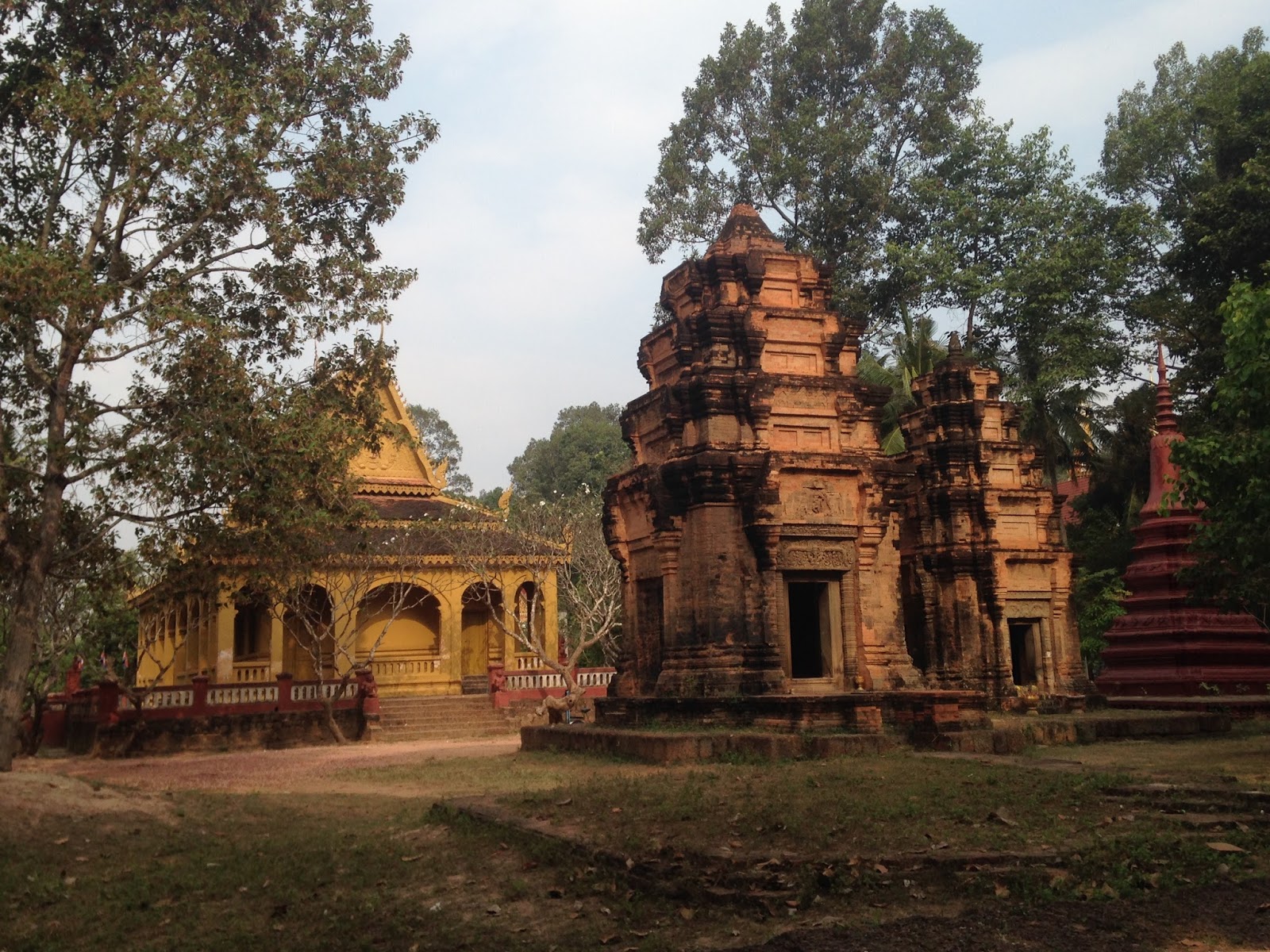
My latest film "Waiting" is available to watch on Vimeo here . The stupa and the thousand year old small ancient temples are located at Prasat Preah Enkosei, Siem Reap, Cambodia. There is an elementary school in the yard of the pagoda, but you only hear the voice of children off screen and the cicadas living on the treetops. In my films not only matter what you see, but also an important part what you hear. ....

I attached two of the behind the scene photos and an extra about the location, where I set my camera. You also can see how the temples looks like from the other side.


Wednesday, April 18, 2018

Thursday, April 5, 2018

The Cow the Dog and the Crow

My latest short film "The Cow the Dog and the Crow" is available on Vimeo here 

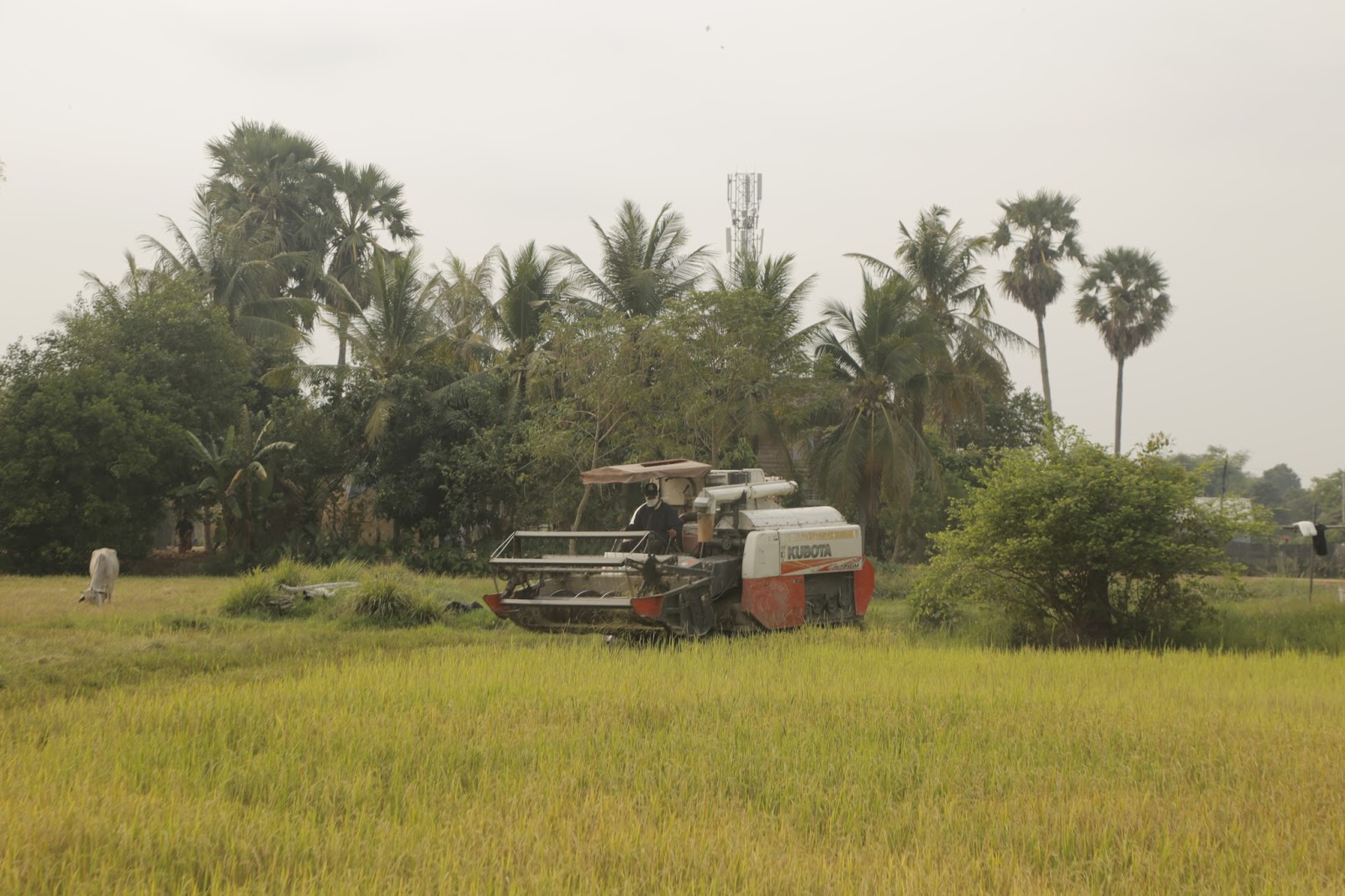
I was filming this beautiful contemplative story in Puok village in Cambodia at the nearby location as I've been shot the The scent of rice. After I finished shooting The scent of rice and took some location pictures, I realized that I locked the ignition key inside my car. Until my wife who was the field producer of this shoot arrived back with the spare key I had time to look after another subject.

I was just such a lucky. There was a lonely house nearby at the edge of rice field with a cow. I thought this is quite interesting and maybe I can shoot another contemplative short until I wait. It was a challenge and just loved every minute. Every moment was a real surprise and at the end I've got a true zen film. Hope you will love it.

Tuesday, March 27, 2018

The Scent of Rice -Slow Cinema

The Scent of Rice my latest film is available on Vimeo from today. Click here to watch
I'm not sure if you can feel the scent of rice like I felt it during I was filming The scent of Rice but sure you're able to feel both the timelessness and timing while watching my film.

Field producer Sophie N. on location in Puok


Monday, March 5, 2018

Passage

"Passage" my latest experimental contemporary contemplative film is available on Vimeo. Click here 
...and I share a behind the seen picture with you this time. 


Wednesday, February 21, 2018

The Bay

The first episode of  my experimental contemporary contemplative film "The Bay" is available on Vimeo. Click here to watch . The Bay has totally 3 episodes and was filmed on two beautiful islands in Cambodia in the Gulf of Thailand, Koh Rong and Koh Rong Samloen. 

Monday, February 19, 2018

The Unbearable Lightness of Being


My experimental contemplative film "The Unbearable Lightness of Being" is available on Vimeo. .... and Yes, I borrowed the title from Milan Kundera.

Click here to watch